Author: Ana Da Silva

  • Data Visualization and Story

    From Kiosk to Ruth E. Dickinson: Library Loans Across Branches 🏛️

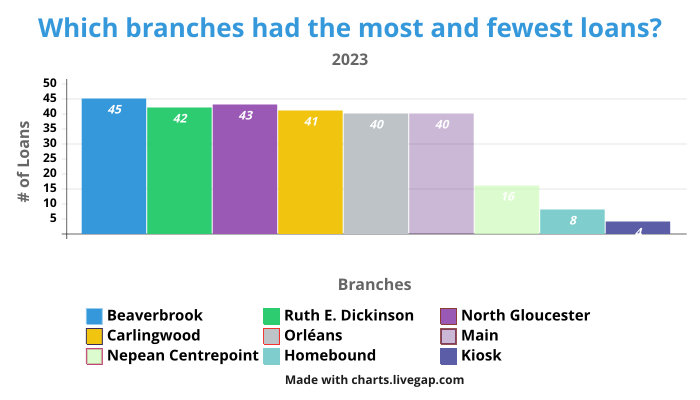
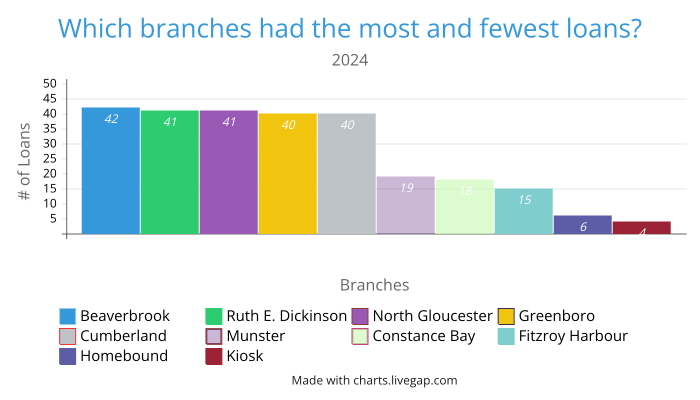
    Library borrowing remained fairly steady between 2023 and 2024, with a slight decrease from 1,139 loans to 1,111, a 2.5% drop. While total borrowing changed little, activity across individual branches showed noticeable differences.
    ( Graph made by; Ana Da Silva)

    High-usage branches like Beaverbrook, Ruth E. Dickinson, North Gloucester, and Greenboro consistently had the most loans, while smaller branches such as Kiosk, Homebound, and Fitzroy Harbour had the fewest. Some branches saw significant changes year over year — for example, Vanier more than doubled its loans from 17 in 2023 to 36 in 2024, making it the branch with the largest increase.
    ( Graph made by Ana Da Silva)

    These charts clearly highlight which branches are most active and which have lower engagement, making it easy to see shifts in usage. Branch-level patterns like Vanier’s growth or Fitzroy Harbour’s decline provide a quick view of changing library demand across locations.

    Overall, even with small changes in total loans, the variations across branches offer valuable insights for library management. The data shows where demand is growing or declining, which can help guide decisions about staffing, resource allocation, and branch support in the coming year.
  • Digital Safety Plan

    • What surprised you, if anything?

    What really surprised me was how much Instagram has changed and the type of content it shows now. I used to think of Instagram as a fun place to scroll through photos, watch cute videos, or catch up on what my friends were doing. But now, I’m seeing videos that I would’ve only expected to see on Twitter (X). Some of it is really disturbing, and I don’t understand how it’s allowed on there. What shocks me the most is knowing that kids are using the app every day. If I’m seeing that kind of stuff on my feed, then so are they, and that’s scary. I feel like Instagram’s algorithm doesn’t protect people as much as it should.

    • Did you change anything? What was your reasoning — convenience, safety, habit?

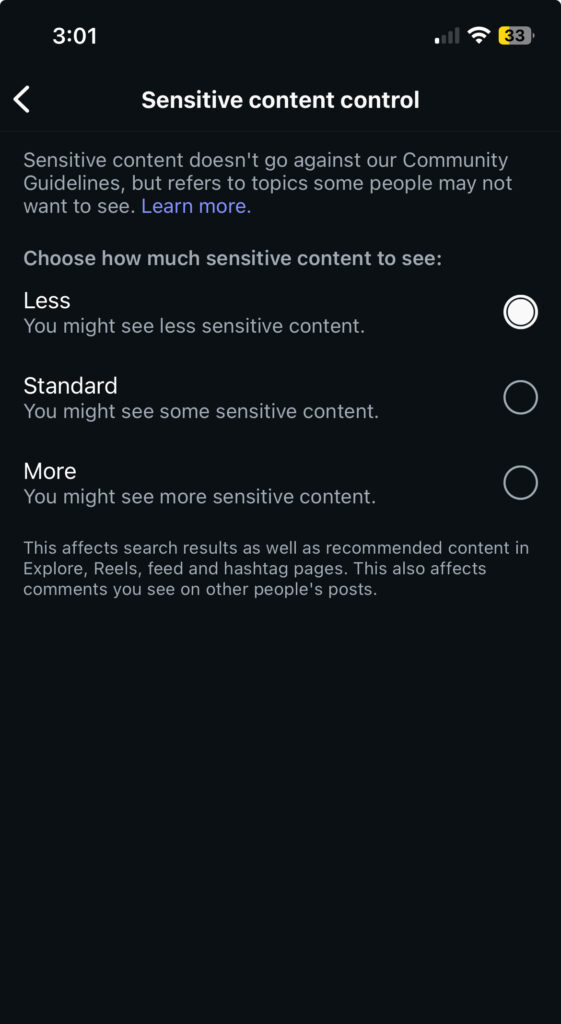
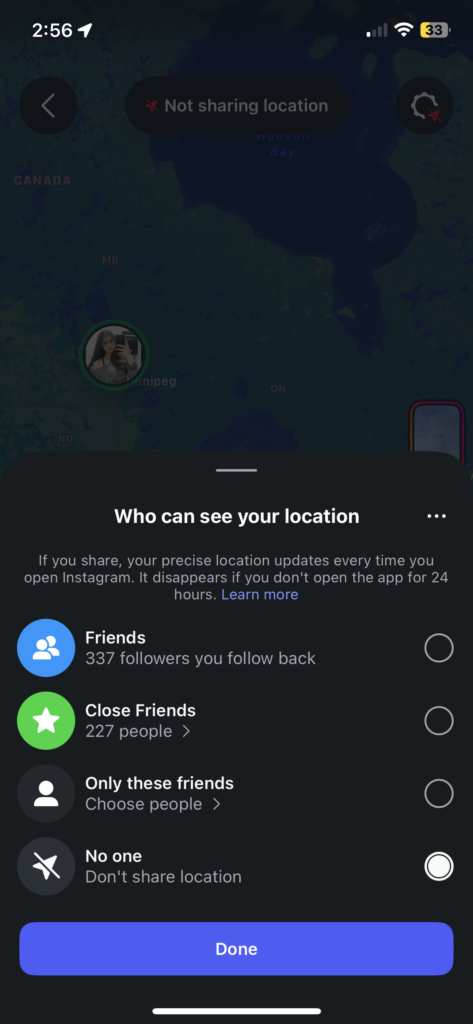
    I haven’t really changed much, since I don’t normally mess with my settings, but I did manage my content control settings a bit. I decided to do that because I wanted to make my feed a little calmer and more positive. When I open Instagram, I want to see my friends’ posts, cute animal videos, and food recipes, not something that’s going to ruin my mood. I don’t deal well with gore or heavy topics, so I try to avoid it as much as I can. It’s not really about safety for me, more about how I feel when I use the app.

    • Using Week Six’s lesson as the backdrop, how might your current privacy setup affect your personal safety if you faced harassment?

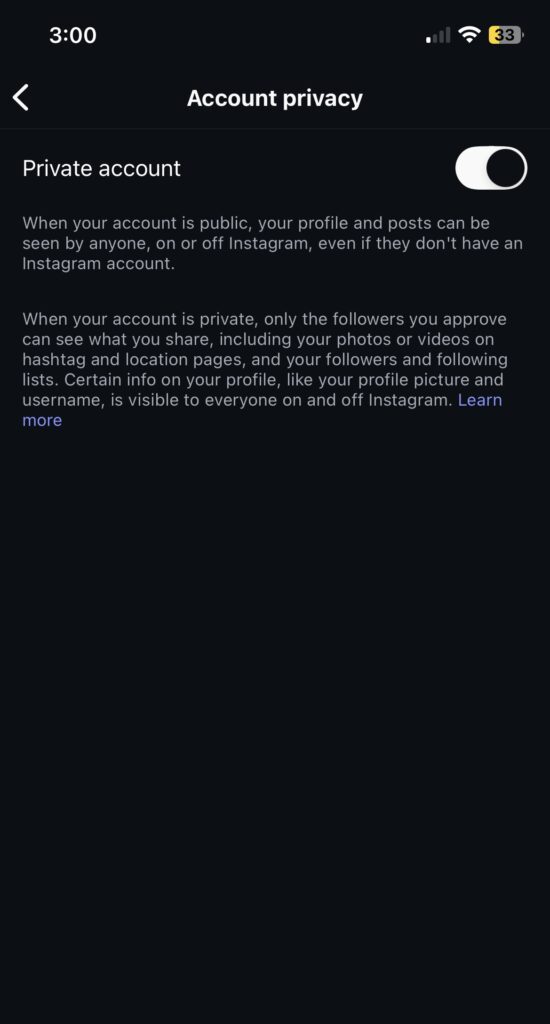
    Even with my account on private, I know it’s not one hundred per cent safe. People can still find ways to send hurtful or threatening messages through DMs or comments. Privacy settings help, but they don’t block everything. If I ever faced harassment, I’d probably block and report the person, but there’s always a chance they could make another account under a different email or even use someone else’s account to try and get to me. What I’ve learned is that having a private account doesn’t mean you’re completely protected. You still have to be careful.